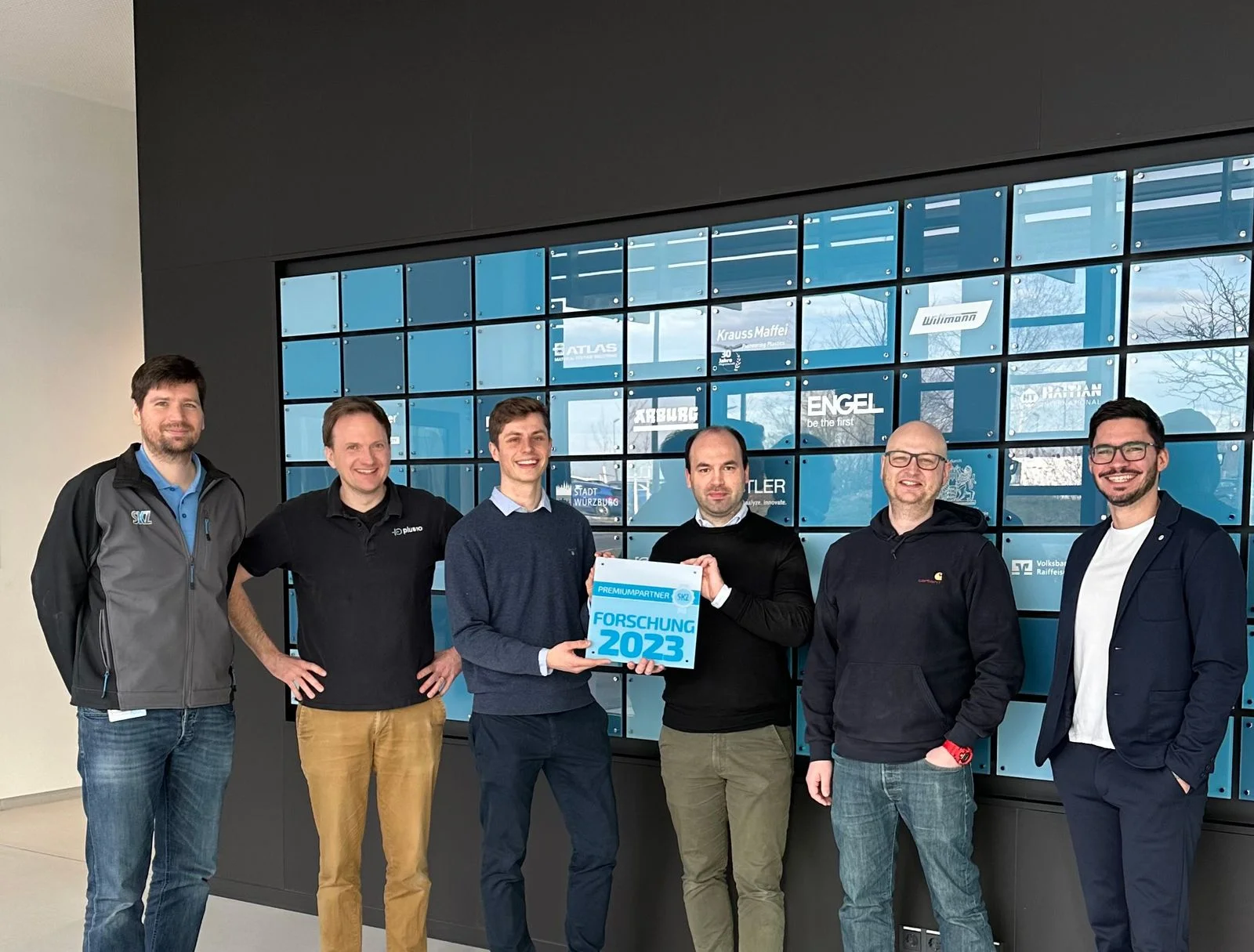
As already for the years 2020 to 2022, the SKZ is again awarding the "Premium Partner" award retroactively for the year 2023 to companies that promote the plastics industry together with the SKZ. Initially, the coveted award was only given to partners in the field of education. From 2023, the award will also be given to partners in the field of research who stand out from all the SKZ's strong partner companies. This is the first time that plus10 GmbH has received this award as a premium research partner of the SKZ for its comprehensive and innovative cooperation in the field of research and development in plastics technology.
The SKZ will once again present the award for innovative plastics companies in 2023
"Companies are selected as premium partners if they work with us to (further) develop innovative topics, sustainably promote and expand research and decisively advance the plastics industry beyond the standard," reports Matthias Ruff, Sales Manager Education & Research at SKZ in Würzburg
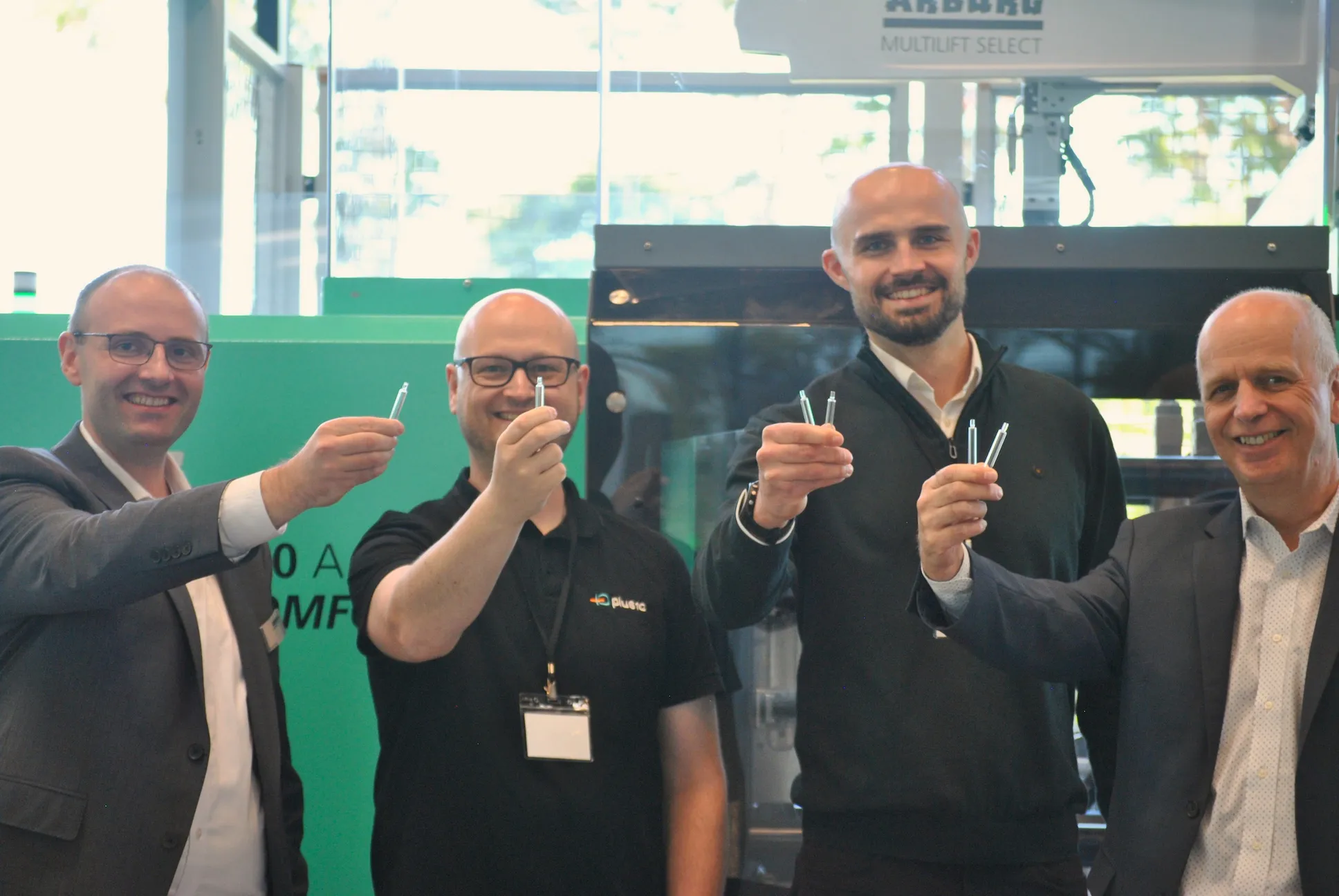
In the past, the Fraunhofer IPA AI spin-off plus10 and the SKZ have already cooperated successfully on various projects. The focus was primarily on the development of behavioral models for the injection molding process. The aim was to research behaviour models that can be transferred across machines and to test them in practice in order to recommend optimized process parameters for the subsequent production cycle. This increases the quality of the products and shortens the cycle times in the ongoing operation of injection molding machines by 6 to 18% in reality.
"We greatly appreciate the efficient collaboration and the extensive process expertise of the SKZ. Thanks to the practice-oriented research, we can develop and test new models very close to real industrial processes and plant technology. This gives us a great advantage in the continuous further development of our learning optimization tools for new problem cases and areas of application. " explains Managing Director Felix Georg Müller of plus10 GmbH.
The start of the "Rezi-KI" research project will continue to drive the cooperation forward in January 2024. "In Rezi-KI, we want to further develop the plus10-Hopper AI tool to compensate for batch fluctuations when using post-consumer recyclates (PCR), which have an impact on dimensional accuracy, surface quality and mechanical properties. The aim is to increase the use of PCR in technical components, e.g. in the automotive, electrical appliances or consumer goods sectors, in order to make a significant contribution to the circular economy," says Jakob Schüder, engineer in the injection molding department at SKZ, looking forward to further cooperation with the plus10 team, BASF, Bosch-Siemens-Hausgeräte (BSHG), Kraussmaffei and Augsburg University of Applied Sciences.
All information on current research projects at the SKZ can be found at https://www.skz.de/forschung .


.jpg)